

Elon Musk is once again the world’s richest person. This milestone highlights how private technology firms now drive global wealth. In the past, public stocks fueled Musk’s gains. Today, however, his wealth stems largely from the rising private valuation of SpaceX.
For investors, this shift reveals a major trend. Value creation is moving toward private, capital-intensive sectors like aerospace and artificial intelligence.
SpaceX: The Primary Engine of Wealth
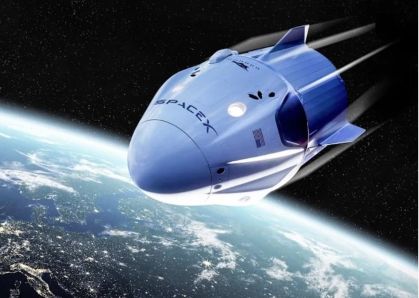
SpaceX has evolved into a fully integrated leader in space technology. Currently, its business model relies on three main pillars:
- Government contracts for defense and space launches.
- Commercial missions for satellite deployment.
- Starlink, a fast-growing global internet network.
These steady revenue streams have fueled consistent growth in private markets. Consequently, Musk’s stake in SpaceX is now the most stable part of his net worth. Because SpaceX remains private, it can prioritize long-term goals over short-term profit pressures.
Tesla and the AI Connection
SpaceX is vital, but Tesla remains a strategic core. Many investors now view Tesla as more than a car maker. They see it as a platform for energy storage and AI-driven autonomy.
Furthermore, Musk is expanding into artificial intelligence through xAI. This move diversifies his influence across the tech sectors that will define the next decade. Together, these assets place Musk at the center of mobility, space, and computing.
Potential SpaceX IPO: Three Scenarios
A SpaceX IPO would be a historic event for global markets. Below are three potential valuation scenarios based on current market trends.
| Scenario | Estimated Valuation | Key Drivers |
| Conservative | $400–$500 Billion | Slower Starlink growth and cautious market multiples. |
| Base Case | $700–$900 Billion | Strong launch demand and steady Starlink expansion. |
| Bull Case | $1+ Trillion | Global Starlink dominance and “trillionaire” status for Musk. |
Any of these outcomes would set new benchmarks for the aerospace industry.
Risks and Market Realities
Despite this massive upside, analysts point to several significant risks. First, a public listing brings heavy regulatory requirements. Second, the company would face pressure to deliver quarterly results. Finally, geopolitical shifts could impact defense contracts.
Musk often expresses concern about the constraints of public markets. Therefore, any future IPO would likely seek to protect his long-term strategic control.
The New Era of Tech Investing
Musk’s wealth reflects a broader change in the financial world. Capital is moving away from purely digital apps. Instead, it is flowing toward “hard tech” like energy systems and space infrastructure.
SpaceX serves as a test case for how markets price mission-critical assets. For the tech sector, it signals that the next wave of value lies far beyond traditional software. Ultimately, a SpaceX IPO would do more than grow Musk’s fortune; it would redefine the value of space technology itself.


Pingback: What is an IPO? A Guide to Technology Public Offerings