Before reading this post, read the DCA one.
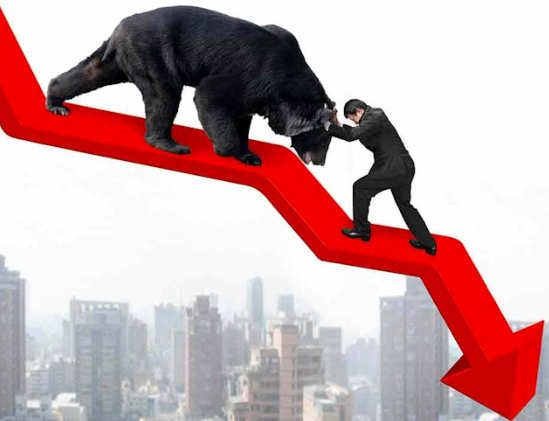
While Dollar-Cost Averaging (DCA) is a highly effective strategy in any market, its true power is unleashed during prolonged downturns, bear markets, and financial crises. These periods, which are often characterized by panic and fear, offer the disciplined DCA investor the greatest long-term advantage.
In a bear market, the primary challenge for most investors is the emotional one—overcoming the psychological urge to stop buying as asset values plummet. DCA transforms this fear into an opportunity, making it the ultimate anti-crisis strategy.
The Bear Market DCA Advantage: Buying Low, Mathematically
The core principle of DCA (buying more units when prices are low) is most dramatically beneficial when prices are consistently falling or remain depressed for extended periods.
The “Anti-Emotional” Mechanism
When a market enters a downturn, many lump-sum investors watch their portfolios shrink and panic, either selling at a loss or freezing their investments.
The DCA investor, however, is simply adhering to a schedule. As prices drop, the fixed cash amount allocated buys progressively more shares or units.
Average Cost = Total Capital Invested / Total Units Acquired
Because the denominator (Total Units Acquired) grows disproportionately during the low-price phases of the bear market, the investor’s average cost basis drops significantly. This creates a powerful springboard effect for when the market eventually recovers.
Example: The Recovery Leverage
Imagine two investors entering a bear market where an asset falls from $100 to $50 before recovering to $100.
| Investor Type | Action during Downturn | Units Acquired at $50 | Units Acquired at $100 | Time to Break-Even |
| Lump Sum (Panic Buy) | Bought $10,000 at $100 (100 units). Stops buying after the crash. | 0 | 100 | Must wait for the asset to hit $100. |
| DCA Investor | Continued to invest $1,000 monthly, buying units even at $50. | Significant number of units acquired cheaply. | Significant number of units acquired cheaply. | Breaks even much earlier because the average cost is far below $100 (e.g., $75), gaining leverage on the recovery. |
The DCA investor achieves profitability sooner because their cost basis is lower, leveraging the recovery phase far more effectively than the lump-sum investor who only bought at the peak.
Three Rules for Mastering DCA in a Crisis
Successfully executing DCA during a market crash requires discipline and preparation.
1. Pre-Determine Your Capital Allocation
The biggest mistake in a bear market is running out of cash early. Before the crash hits, determine your total desired investment size and divide it over a long time horizon (e.g., 2 to 3 years). This ensures you have capital ready to deploy throughout the entire slump. Never commit more capital than you can afford to lose or tie up for years.
2. Embrace the Volatility (The Math is Your Friend)
Every time the market drops by an additional 10%, view it as your DCA process working perfectly, not as a sign of failure. The goal is not to see daily profit but to reduce your average purchase price. If the market feels scary, automate the purchases to completely remove the emotional temptation to stop buying.
3. Focus on Quality Assets
DCA is a strategy for accumulating high-quality, resilient assets. In a crisis, the weak companies fail, and the strong ones survive and dominate the recovery. If you are investing in cryptocurrencies, focus on established, fundamental protocols (e.g., Bitcoin, Ethereum). If you are investing in stocks, focus on companies with strong balance sheets and sustainable business models. DCA cannot save a poor investment choice.
DCA vs. VCA (Value-Cost Averaging)
For investors seeking to become slightly more sophisticated without timing the market, Value-Cost Averaging (VCA) is an interesting alternative.
- DCA: Invests a fixed dollar amount ($X) at regular intervals.
- VCA: Invests a variable dollar amount to ensure your portfolio value increases by a fixed amount ($Y) at regular intervals.
In a bear market, VCA requires you to invest more cash than DCA to hit your target portfolio value (since the asset price is falling). In a bull market, you invest less cash. VCA is mathematically superior in optimizing capital usage but requires more active management and commitment of capital during deep downturns. For most retail investors, the simplicity and discipline of traditional DCA are preferred.
Conclusion
The bear market is not a time to retreat; it is the time for the strategic deployment of capital. DCA is the mechanical solution to the emotional challenge of crisis investing. By setting a schedule, focusing on quality, and embracing the math that forces you to buy more when others are selling, the DCA investor turns market fear into maximum long-term financial leverage.